
AFFF Transition and PFAS Compliance for Part 139 Airports
The mandate to shift from legacy aqueous film-forming foams (AFFF) to Fluorine-Free Foams (F3) is more than a chemical swap—it is a complex infrastructure and liability challenge. We provide the specialized decontamination and engineering expertise to ensure your airport meets FAA requirements while mitigating long-term environmental risk.
Managing the Legacy of Firefighting Foams
For decades, FAA regulations mandated the use of PFAS-heavy AFFF for emergency response and training. Today, airport managers are caught between expiring mandates and aggressive new EPA "Hazardous Substance" designations. Simply switching to F3 is not enough; if the underlying infrastructure is not properly addressed, "re-contamination" can occur, extending your liability for years.
Aviation authorities currently face:
Infrastructure Decontamination: Removing PFAS residuals from ARFF vehicles, hangar suppression systems, and piping to protect new F3 investments.
Groundwater & Stormwater Plumes: Managing legacy contamination from historic fire training areas (FTAs) and nozzle testing sites.
Regulatory Compliance: Meeting the 2024/2025 transition deadlines while ensuring all discharged water meets evolving state and federal standards.

Specialized Services for Airport Environmental Safety
PFAS Engineering Solutions delivers the technical precision required for high-stakes aviation environments. Our services are designed to minimize operational disruption:
ARFF Vehicle & Hangar Decontamination: Utilizing proprietary, multi-stage rinsing protocols to remove PFAS "sticking" to the internal surfaces of tanks and lines.
Site Characterization (Soil & Water): Mapping the precise footprint of legacy foam use to develop targeted, cost-effective remediation strategies.
Transition Planning & Consulting: Guiding airport leadership through the logistical hurdles of the MIL-PRF-32725 (F3) transition.
Nozzle Testing Solutions: Implementing containment and treatment systems for mandatory equipment testing to prevent further soil and water impacts.
Nationwide Reach for National Airspace Challenges
As a division of NV5, we combine deep aviation-specific chemistry with the resources of a global engineering leader. Our team understands the unique operational rhythms of Part 139 airports—from small regional airfields to major international hubs. With over 100 offices, we can deploy rapid-response teams for onsite sampling and decontamination anywhere in the country, ensuring your airport stays open, operational, and compliant.
Don't Carry Legacy AFFF Liability into a New Era.
The transition to Fluorine-Free Foam is an opportunity to clean up your infrastructure and close the door on future liability. Our senior engineers and geologists are ready to audit your facility and provide a clear, defensible path forward.
Airports Like Yours Trust Us – See the Results
Don't just take our word – our track record with NV5's PFAS projects delivers measurable wins for Part 139 airports facing contamination pressures from legacy AFFF and emergency responses.
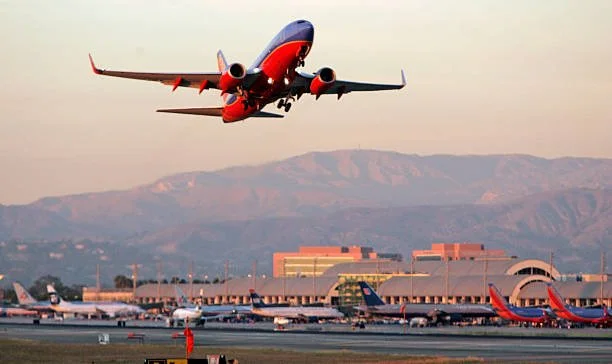

John Wayne Airport Improvements
Project Description
John Wayne Airport’s Capital Improvement Projects includes the rehabilitation and modification of building systems, security improvements, design and construction of new structures and other projects requiring engineering studies. As part of a five year on-call contract, PFAS-ES is providing on-call geotechnical engineering investigations and recommendations, as well as materials testing and inspection services including steel, concrete, asphalt, soils and other construction materials.
Value Added
PFAS-ES mobilized a geotechnical investigation to provide pavement design sections for several emergency pavement repairs required at the site. The investigations were mobilized quickly to perform the repairs prior to the rainy season. The pavement design recommendations were provided less than one week from the completion of the drilling.
San Diego International Airport On-Call, Environmental Services
Project Description
PFAS-ES conducted a comprehensive site-wide Phase I ESA, a Phase II ESA, supplemental Phase II ESA, and human health risk assessment for the San Diego Airport Support Facilities. The Phase II investigations comprised a total of 109 borings for the collecting of soil-gas, soil, and groundwater samples. Samples were analyzed for heavy metals, volatile and semi-volatile organic compounds, petroleum hydrocarbons, jet fuel, polychlorinated biphenyls, and PFAS. Included in the Phase II ESA report was a preliminary vapor intrusion health risk assessment to evaluate the potential risk to future building occupants to contaminated indoor air resulting from intrusion of subsurface soil gas.
Value Added
PFAS-ES recommended the performance of a detailed vapor intrusion human health risk assessment (HHRA) due to the borderline analytical results obtained during the site investigation that indicated a potential unacceptable health risk. The detailed HHRA indicated that some form of vapor mitigation was necessary to protect occupants of future structures at the airport, confirming our initial concern.